
Fantasies, Forests, Fossils, Futures: Questions of Climate Crisis
Thursday 18 June 2026, 12 midday - 1.30pm
Seminar Room 63, Schwarzman Centre for the Humanities
All welcome
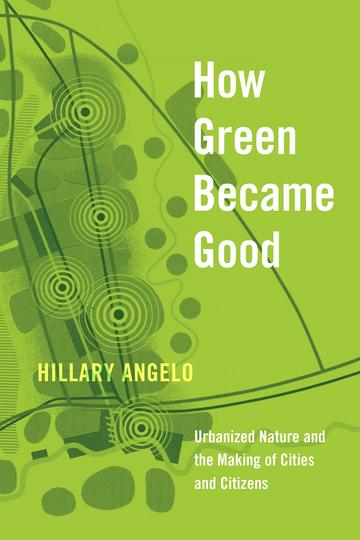
What remains and what is next for a climate-changed world? Hillary Angelo’s How Green Became Good: Urbanized Nature and the Making of Cities and Citizens (UCP, 2021) examines urban greening as a social process, tracing its history from industrial cities to climate urbanism. Lynne Huffer’s These Survivals: Autobiography of an Extinction (DUP, 2025) reflects on climate change and mass extinction and articulates an ethics of living on a devastated planet.
In this roundtable, the authors will be in conversation with the anthropologist Nayanika Mathur to explore how cultural, material, and ecological legacies of the past are used as resources for the future, particularly in addressing and adapting to climate change.
Lynne Huffer is a writer, collage artist and Samuel Candler Dobbs Professor of Philosophy at Emory University. In These Survivals (Duke University Press, 2025), she bridges her research and creative practice to explore the connection between the time of intimacy and geological time.
Hillary Angelo is an Associate Professor of Sociology at the University of California, Santa Cruz. Hilary bridges political, economic, and cultural approaches to urban and environmental studies, and is particularly interested in the politics of the built environment. She is the author of How Green Became Good (University of Chicago Press, 2021).
Nayanika Mathur is Professor of South Asian Studies and Anthropology at the University of Oxford. Nayanika’s work spans the anthropology of politics, development, environment, law and human-animal studies. She is the author of Crooked Cats: Beastly Encounters in the Anthropocene (University of Chicago Press, 2021).
Environmental Humanities, TORCH Hubs

